Saving Private Pollywog

What do you do when your pollywogs don’t mature? Follow my journey through relocations and searches for just the right food to send my farm tadpoles onto their journey to maturity.

Colorado’s high-elevation semi-arid shortgrass prairie east of the Front Range is home to ranchland dotted with shallow seasonal clay-lined “stock ponds” that hold water for a while after a torrential rain from a thunderstorm. These so-called ponds are located at low spots, and fill with rain runoff from the surrounding fields. Some are small, and may more appropriately be called puddles.

Be that as it may, prairie spadefoot toads and numerous other species – not only of other toad varieties, but also dragonflies, damsel flies, hover flies, tiger salamanders, and even tiny fresh-water mollusks – rely on these temporary ponds to hold water long enough for their offspring to mature and carry on the legacies of their respective families.
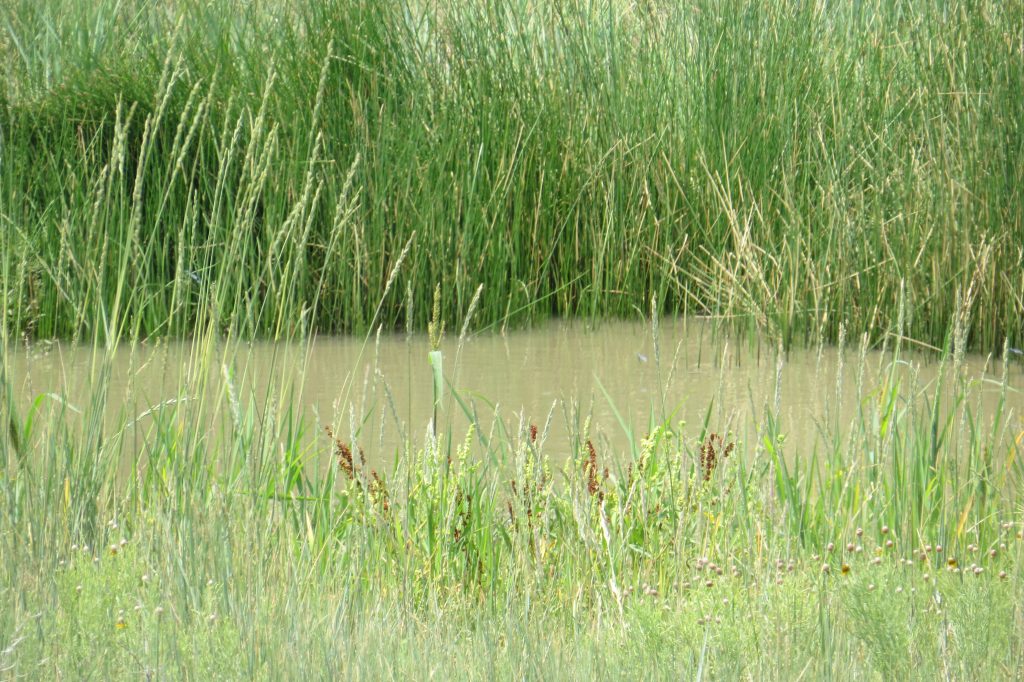
Small stock pond

The pond shown is murky, which is often its condition, at least until the pollywogs mature and move out. (I’m using the terms “pollywog” and “tadpole” interchangeably – both refer to the larval stages of frogs and toads.)

The surrounding vegetation consists of native grasses and forbs, wheatgrass, and sedges.

An afternoon thunderstorm at an appropriate time in early summer prompts the toads to gather in the pond of their birth, croak through the night to attract mates, lay their eggs, and disappear again to their underground torpor waiting for another appropriately-timed thunderstorm. Ideally, the pond will fill with rainfall from a thunderstorm, and subsequent rains will keep it adequately filled for at least a month while the pollywogs develop.

Normally, it takes about a week for the pollywogs to hatch, and another three to four weeks for them to mature and leave the pond. I’ve run flexible three-quarter inch irrigation pipe to the pond so it can be refreshed with water if rains don’t provide sufficient supply while the tadpoles develop.

This year (2021), we had a good rain with a thunderstorm on May 31. A couple species of toads were heard croaking from the pond that night. I saw some of them, but they mostly submerged and all were quiet when I approached the pond. This behavior was different from previous years, in which I had been able to get closer and photograph them, their eyes reflecting the light of the camera or my headlamp, and their voices calling. The video below was recorded June 1, 2019.
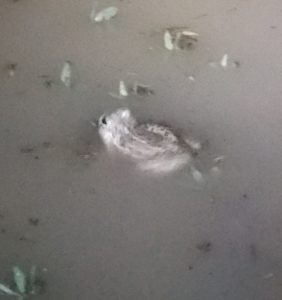
Toad in stock pond June 1, 2019

A week after the end-of-May rain and subsequent toad gathering, tadpoles emerged on schedule. At first, most are very dark, almost black, and tend to cluster along the shallow east edge of the pond. A week or two later there was another thunderstorm, and I thought I heard toads at the pond again. There may have been a second batch of pollywogs.

Weather got hot in June with temperatures in the 90s, and in that shadeless environment, it was probably over 100 degrees Fahrenheit in the afternoons. Nighttime temperatures at this elevation are very comfortable, at around 60 degrees Fahrenheit. The hot days evaporated much of the water from the pond, and though it became much smaller,  I kept it from drying out.
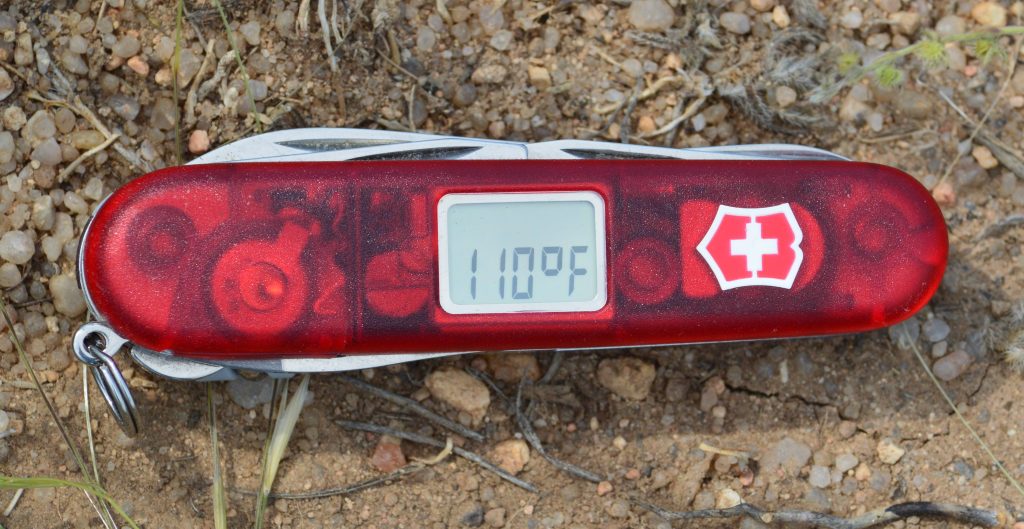
Daytime temperature 110 degrees Fahrenheit

More than a month after the tadpoles should have matured into toads and left the pond, they were still there; it was mid-July. “Maybe it’s the second batch,” I thought. Early August, they still were there, smooth-bodied and legless. Pollywogs normally eat a lot of algae, and there was no sign of algae in the pond. I thought perhaps they weren’t getting sufficient food to mature. I found some old fish food stored in the garage that I’d had years before for goldfish and koi in a garden pond. Mice had eaten the pond pellets, but the canned flakes were still there, and I began feeding some to the pollywogs. Still, no further development.

Into August, I became concerned that these guys wouldn’t mature and move out of the water before freezing temperatures and snow arrived. (Last year’s September 8 snowstorm was unusual, but weather had become more erratic in recent years.) I did some research and found that, indeed, lack of food can cause tadpoles to remain as tadpoles. The other problem that was mentioned – colder water temperature – was not likely a problem given the shallow water and very hot daytime temperatures. I determined to double down on the feeding. What I had read said that pollywogs might even remain in the larval stage through to the following summer, if they can survive the winter (which they wouldn’t here, unless taken indoors).

The old fish food was used up, and I had ordered more. I tried to find brands that had more actual food and less wheat flour, corn gluten, and soy meal. I have no idea why fish food includes artificial colors, alcohol sugars, sometimes garlic, and occasionally even rosemary. I wasn’t certain how pollywogs would tolerate such foreign ingredients, and started those foods gradually.

You cannot assume that the item in the product name is even in the first half-dozen ingredients of the ingredients list! You must read the list of ingredients to determine if it’s something you want to feed your fish. 

Even in products that claimed to be “algae wafers”, spirulina or kelp or algae wasn’t listed until the sixth to ninth ingredient – the first five were fish meal, grain meals or flour, and soy meal. Foods designated for herbivorous fish such as algae-eaters, plecostomus, and other bottom-feeders had various kinds of fishmeal as the first and second ingredients, which were followed by wheat and soy meals, and then finally spirulina and other plants. You cannot assume that the item in the product name is even in the first half-dozen ingredients of the ingredients list! You must read the list of ingredients to determine if it’s something you want to feed your fish. I could not find a fish food that was primarily algae. Some foods even appear to be primarily fillers of grains and soy fortified with vitamins.

At first, I used floating KayTee pond pellets and Tetra pond flakes. Right after feeding them, the tadpoles seemed less frantic and more inclined to disperse rather than clump together, but they still didn’t advance in their development.

I decided to move some of the tadpoles out of the stock pond into places near the house: a low stock tank, a tiny pool in the yard, and the old garden pond, which had once provided a home for a brood of tiger salamander larvae to grow up.

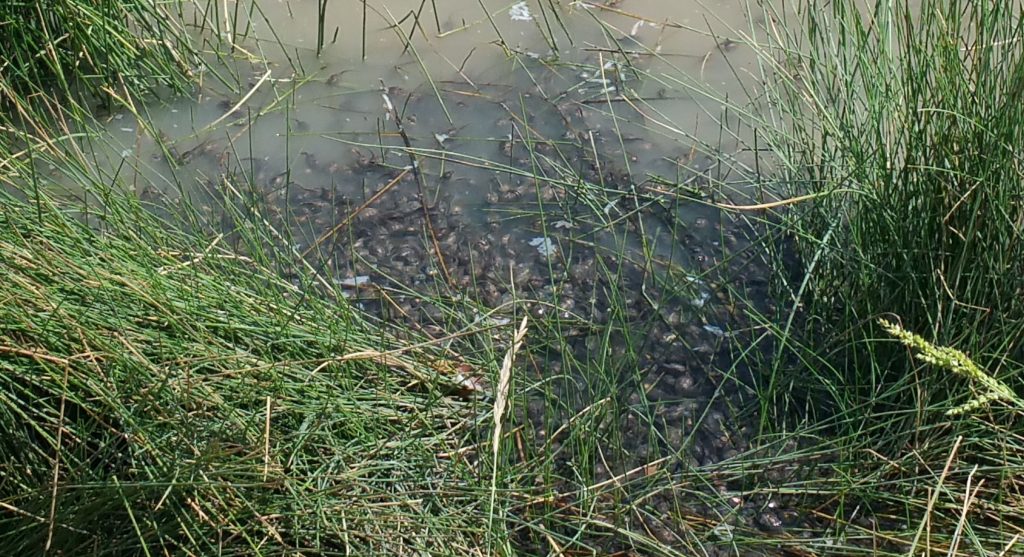
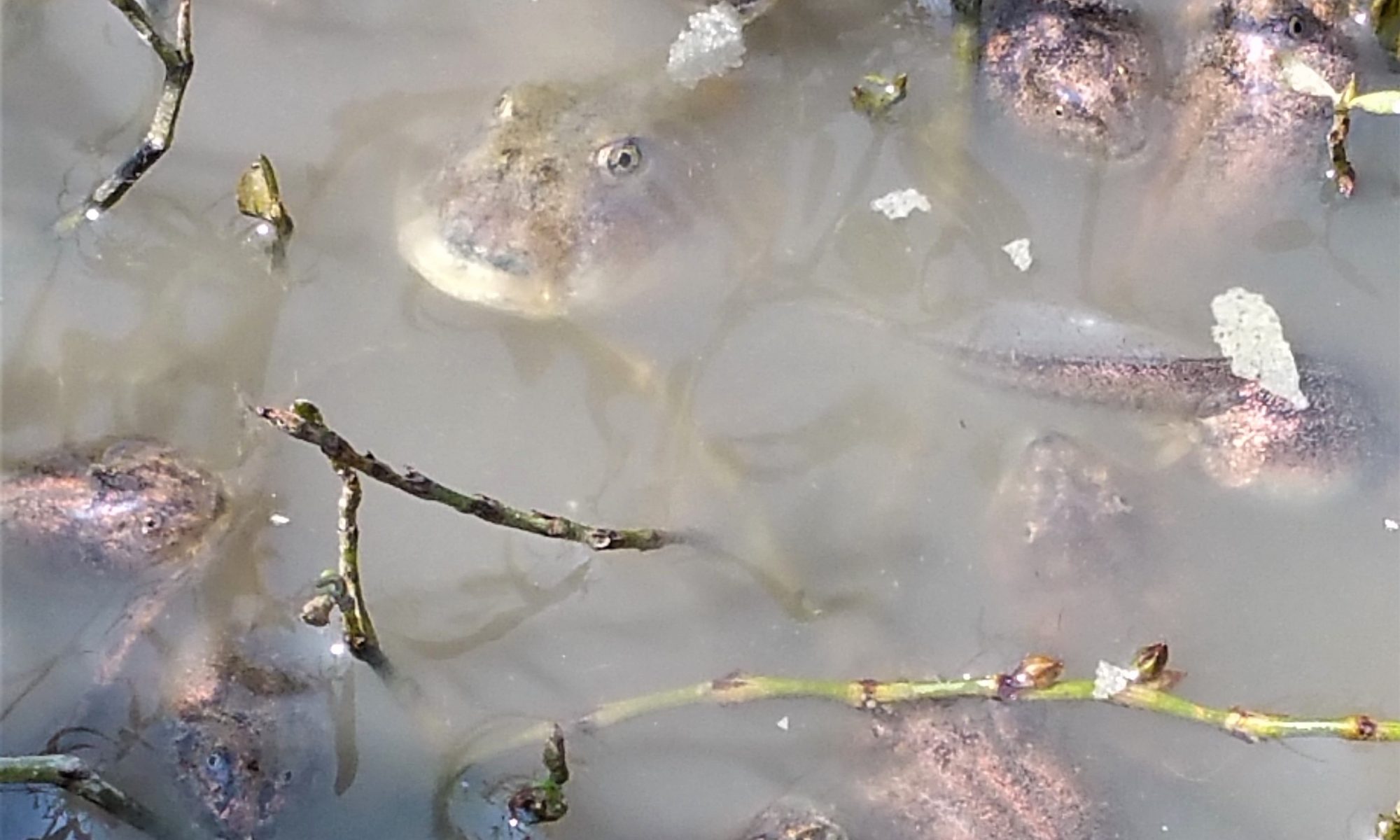
Running water into the pond and taking a pail and plastic cup to catch and carry the pollywogs, I was astonished to estimate about 2,000 of them clustered into a single thrashing heap at the point where the fresh water ran into their pond. Catching them was unexpectedly easy. The pond photos below, of this crowding at the inlet, were taken after removing 1,000 or more to a bucket.
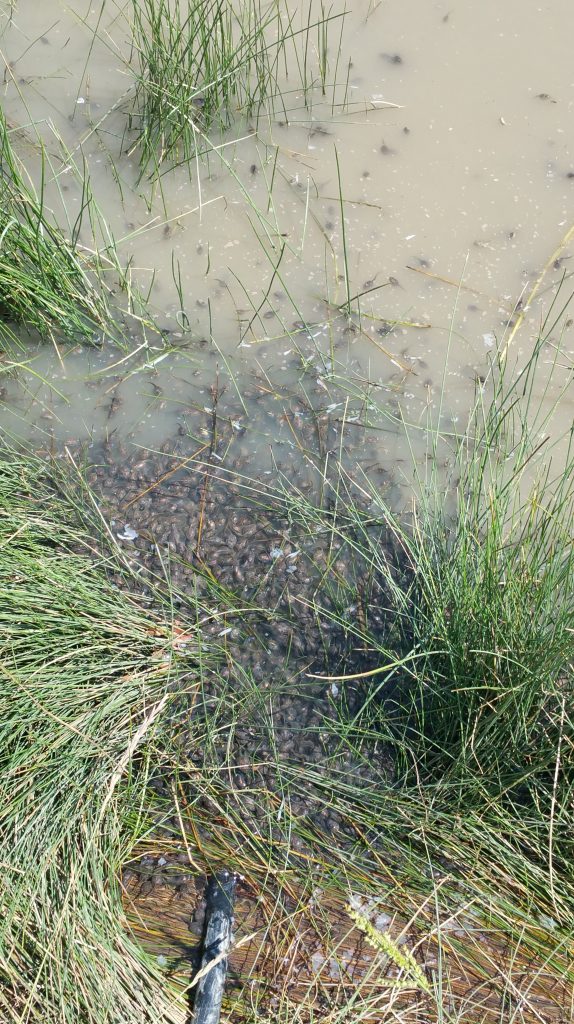
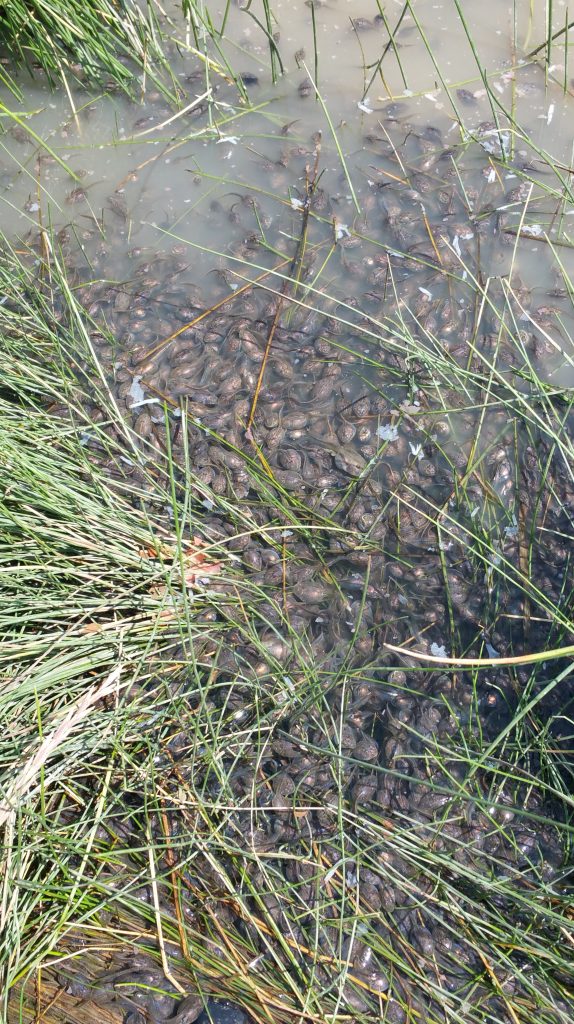
Gathered, fed, and ready for transport:
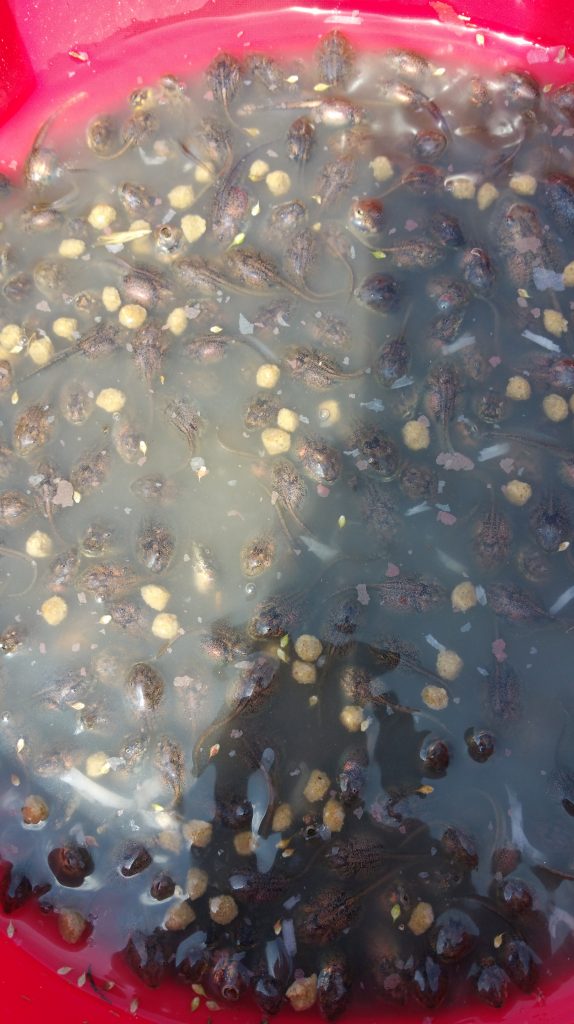
Rescue mission

I wound up with a few hundred in a low stock tank, a few hundred in the old garden pond, 100-200 in half of a blue plastic 55-gallon tank, and a dozen in a tiny pool in the yard. The small stock tank had had water in it previously, and its sides were coated in a thin layer of green-looking algae. I dumped out the old water, and left the algae on the sides for the tadpoles to eat (after I refilled it) – which they did in short order. I even relocated some of the algae from the tiny pool to the other tadpole locations, hoping that more algae would grow from it.
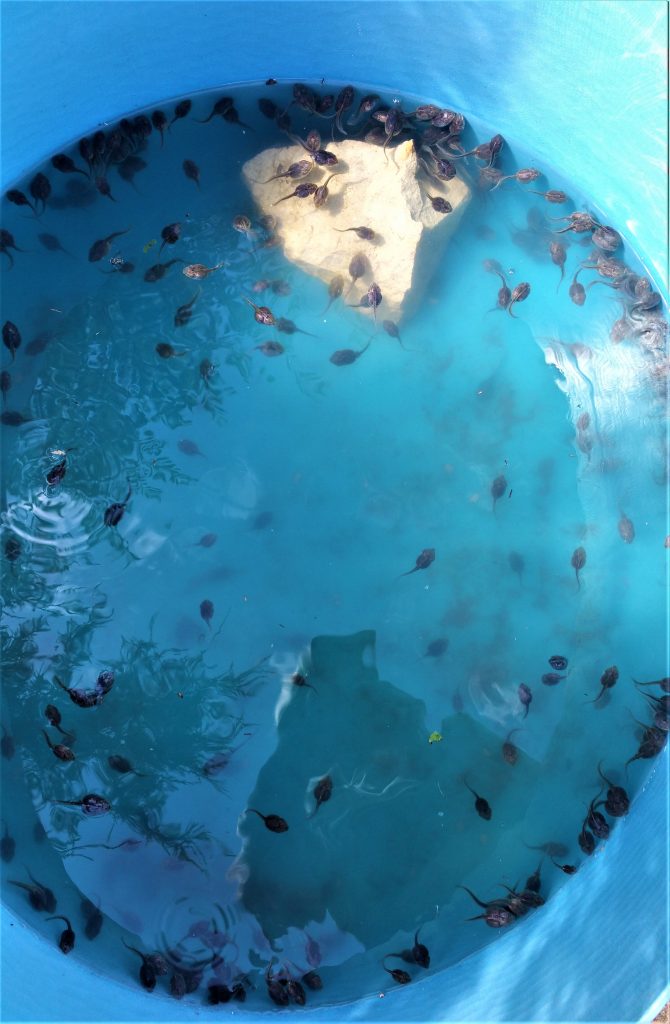
A new home, August 23, 2021

In the process of making sure all the tadpoles were out of the bucket (I didn’t want to dump muddy water into the new locations), I found three of the tiny freshwater mollusks that had so baffled me about this time last year (late summer 2020). I released them into the garden pond. You can read about last year’s discovery here (https://www.theothercolorado.life/2020/09/01/mollusks-on-the-prairie/).

When I went to order more of the same Tetra pond flakes, the price had nearly tripled, so I switched to Aqueon Goldfish Flakes. I also ordered four more 3-pound bags of KayTee floating pellets. (I should have ordered more, because next time I looked, they, too, were more than double the price.)

I did finally find a food that appeared from the ingredients list provided by an online store to be mostly algae, but actual images of the ingredients list of the same product on other sites showed the first ingredients were salmon and herring – still, an improvement over fish meal and grain products. The food was expensive, but time was growing short to get these pollywogs matured. I ordered some to try it. This pricey food was Omega One Veggie Rounds, available in multiple sizes from different sellers. From the varying ingredients lists provided by different sellers of several Omega One products, I suspect that the recipe for some of their fish foods has been tweaked a couple of times. Regardless of the specifics, the basic ingredients are the same, and the recent results with the pollywogs are noticeable.

The day the new Aqueon flakes and Omega One Veggie Rounds arrived, I noticed at the evening feeding at the blue container that a few of the pollywogs were dying, and quite a lot weren’t behaving normally and had cloudy-looking skin. I was concerned that something, perhaps a fungus, had infected them.  Normally, I prefer to introduce one new thing at a time, to make troubleshooting of any subsequent problems simpler, but in this container with so many unwell tadpoles, I broke that rule.

The Aqueon food includes garlic (as well as chili powder and marigold powder), and the Veggie Rounds contain vinegar and rosemary, all of which I was concerned might adversely affect tadpoles. But at that point I thought garlic and rosemary might help clear up a fungus, and I fed them some of the new foods. (It also rained that night.) The following day, the tadpoles had improved. By the day after that, they were were zipping around as they normally did. Some of them had grown a bit larger, many were changing from teardrop-shaped to mouse-shaped. The day after that (today, August 28, 2021), most seemed to have grown a bit more, and a third or so were beginning to grow hind legs. The tadpoles that I had relocated to the tiny pool, the stock tank, and the garden pond lagged a day or two in development behind those in the little blue tank. Those remaining in the stock pond didn’t seem to change until a few days later.
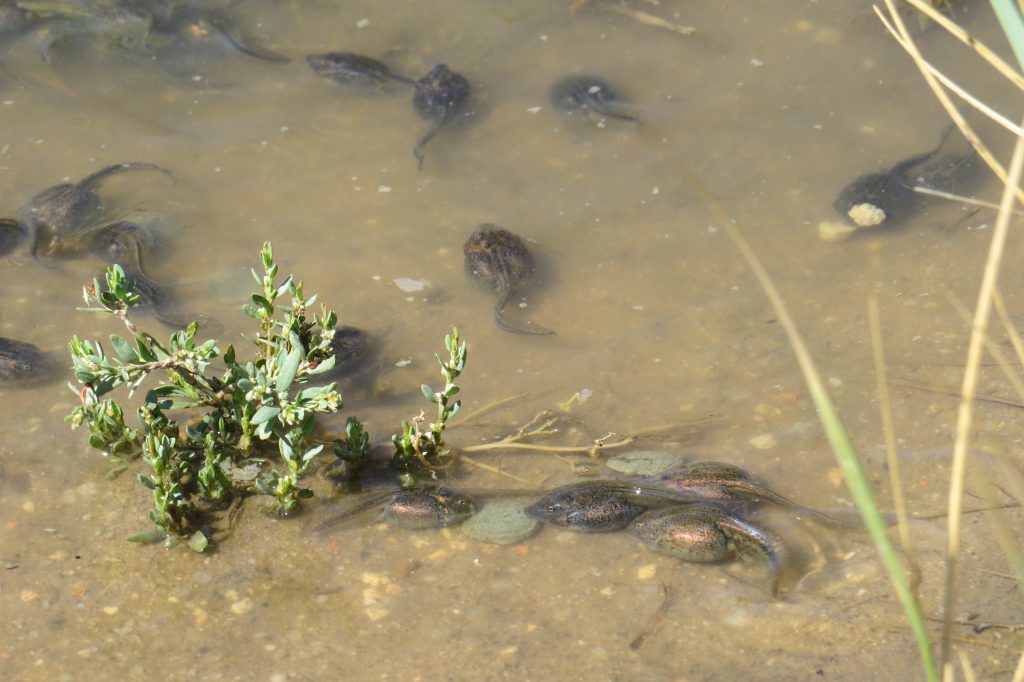
Tadpoles nibbling their first Veggie Round meal (August 27, 2021)

With its rubber liner torn and partially absent, the garden pond requires daily refreshing with water. I stacked flagstones in the blue plastic container, providing a place for maturing toads to get out of the water, and I added a rock to the low stock tank. Maturing toads would be able to exit the tiny pool and the garden pond on their own. However, if I noticed and could catch them, I would try to return nearly-developed pollywogs to the stock pond so they wouldn’t be confused about where to return after an early summer thunderstorm.  One such happy event had occurred recently when one of the tadpoles in the little blue container had grown both functioning hind legs, a right arm, and its left arm could be seen moving beneath the skin. I scooped  up the little fellow, fed it well, and returned it to the stock pond.

Although I hadn’t noticed advancing development in the stock pond tadpoles a couple of days ago, after a few days with reduced population and two days of feeding with the sinking Veggie Rounds and Aqueon flakes in addition to the usual Tetra flakes and KayTee floating pellets, I did see a change. I got quite excited today when I noticed one little toad of a lighter almost tan color appearing quite far along with both legs and one, possibly both, arm(s) – though it still stayed completely submerged. The Omega One food may be well worth the higher price.

In the garden pond this morning, some of the plants and even the tall sunflowers had been knocked down or off to the side when something evidently went down the bank and through the water. The cats wouldn’t likely go splashing through a shallow garden pond. I don’t know if the skunks would. I was betting on the never-seen animal that has sometimes thrown lids off of the trash cans used to store the various bird seeds. The only animals I know of (lacking native monkeys and apes in North America) that are known to remove trash can lids are bears, of which there are none here, and raccoons. I was betting on the raccoon in spite of never having seen one here. The trail through the grass and weeds would have been about raccoon-sized.

At just the stock pond today, I used up a whole 8.1 ounce can of the Veggie Rounds (and could easily have used a second, had there been one), half of a can of Tetra flakes (a different variety from the original), half a can of the Aqueon flakes, and numerous handfuls of KayTee floating pellets. At about a pound and a half of fish food per day, I hope the pollywogs will soon mature!

Sunday August 29, 2021:

Feeding the tadpoles this morning, I was dismayed to observe that there appear to be fewer of them today. I suspect that a raccoon has made a meal of some of them overnight, though I can’t prove it. And though I’ve seen raccoon-looking handprints in mud at the stock pond (and hind footprints as well, last year), I’ve not actually seen a raccoon here; there’s just the belief that nothing else would have flung off the trash can lids. (Last year, it managed to pry up a tied-on lid far enough to squeeze inside, tear up a bag of cat food stored in it, and then exit.) I shall have to find something to cover the two tanks at night, though there’s not much to be done to keep a predator out of the garden pond.
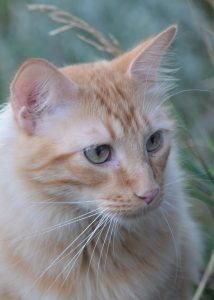
 

Do You Know Me?

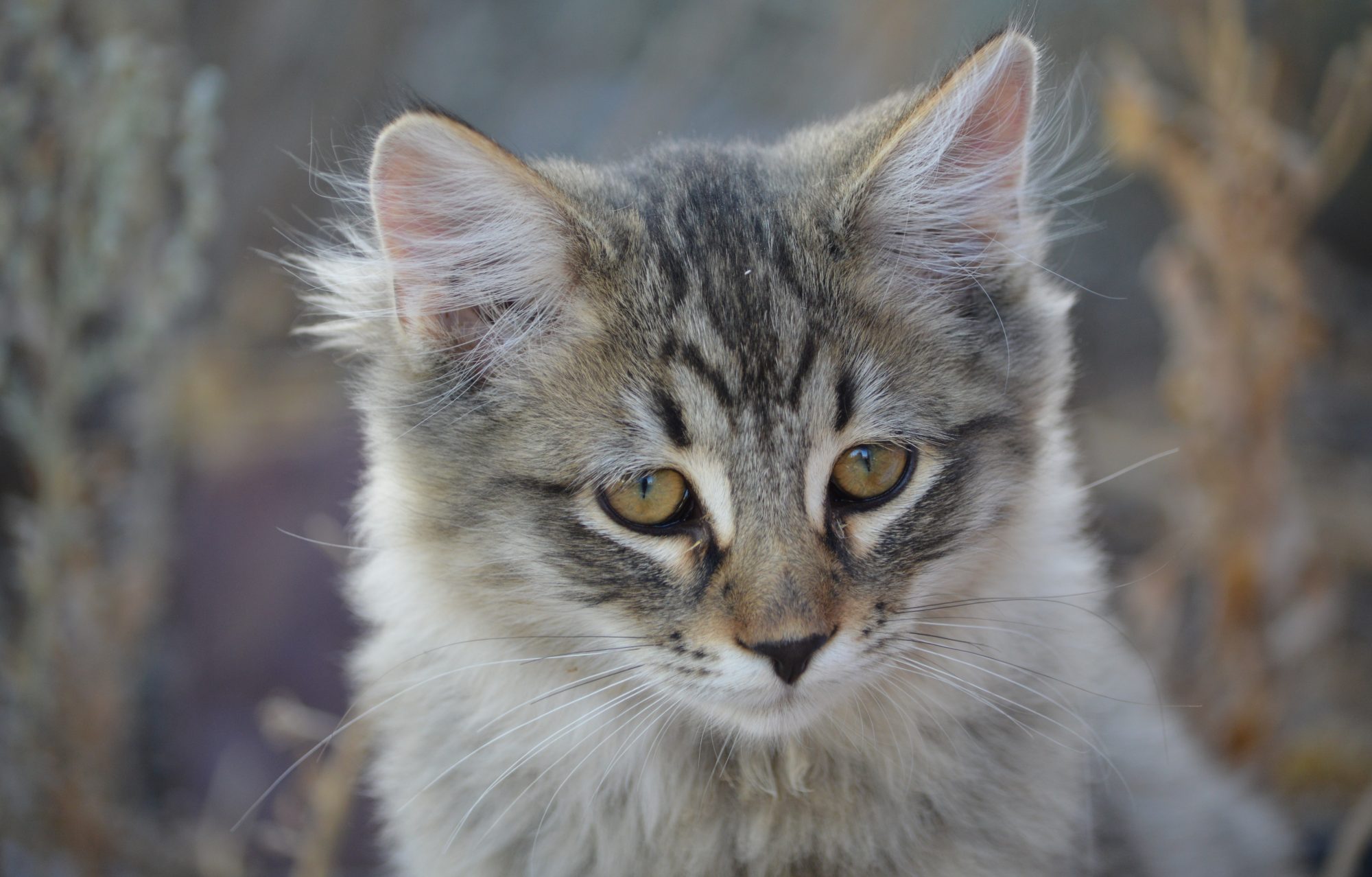
Punkin had a previous owner whom he adored.

Big personality kittie!
Punkin

Most cats who come to live here are pretty tight-lipped about their past. I get no feel for what their prior lives were like. No so with Punkin. He speaks volumes. The language difference provides a bit of a challenge, so I’m not certain that my interpretations always are correct. But he’s pretty direct, and with the body language, tone, and facial expression, some of his story appears to come across pretty clearly.

What I know of Punkin is just what I was told when I adopted him from the humane society in Pueblo, Colorado. I had been searching for a similar-looking cat who had shown up at my home, taken a brood of kittens under his fatherly wing for six months, and then disappeared. The kittens and I all quickly had grown to love Peachy deeply, and we all felt the loss of his serene presence. We all wanted him to come home, and I carried on searching for him for months: in the neighborhood, online, and in humane society offices.

I had come across a similar looking cat in an online search of the Humane Society’s website. Knowing the capricious nature of photographs in producing an accurate rendering of either human or feline appearance, I went to see each long-haired orange cat in person.

Punkin had been brought to the Humane Society as a stray, and thus it was that our paths met. Something in his personality reached me through the plexiglass, and I asked to visit him face to face. Punkin and I were introduced to one another in a little glass-walled room. I could tell right away that he was different from other cats. He was extremely alert to everyone who walked by.

The Pueblo humane society is not especially busy (or wasn’t when I was there), and unlike the one in Colorado Springs, does not have a continual stream of people walking around. Punkin (my version of the “Spumpkin” they had assigned to the little fellow) explored every wall and corner and item in the room, and when someone walked by, he stood, head up, eyes bright, ears pricked, examining every passer-by. I didn’t realize it at the time, but thinking of it now that I know him better, I suspect he was looking to see if his previous person might be coming to take him home.

Thinking that the loss of such a spiritual soul as Peachy should result in some benefit to someone, I decided to adopt Punkin. When the young lady at the desk told me that Punkin had been brought in by someone as a stray, she also mentioned that sometimes people bring in their own pets as “strays” so they don’t have to pay the surrender fee.

The humane society requires adopted cats to be spayed or neutered, so I had to come back another day, after Punkin was neutered, to bring him home. Punkin had a bit of a sneeze, so for a time my den became his personal room. He and the other house cats could sniff and become acquainted with one another gradually, if they chose to visit under the door. I hoped that he and Fitty, the first and most territorial of my current housecats, would become accustomed to one another, and not fight when introduced face to face.

Punkin was very well-behaved. He didn’t climb the book shelves, didn’t tear down the drapes, didn’t knock anything over, didn’t scratch the furniture, didn’t yowl. He scratched his claws on the scratching post, played with his toys, and sometimes I’d find both his toys and mine where he placed them, in his little cat bed.  When we played, if he reached for my hand, he didn’t extend his claws.

Punkin always has been a perfect gentleman. I couldn’t imagine a more well-behaved guest. Use of the term “guest” is a bit curious. Yes, he is one of the family. But another home, another person, still tugs at his heart. A couple years later now, Punkin has integrated more with the family (both human and cat), while still maintaining his unique, enthusiastic personality.

When I first let Punkin out of his quarantine room to visit with the other cats, they all, including Fitty, took to him right away. He even gets Fitty to play more often, as he did in his youth. Scotch and Mimi, however, are more readily inclined to gallop up and down the hall, play in mock battles, and share their toys. Mimi has been full grown since I’ve known her, but still is as playful as a kitten.

Punkin stops playing only when he’s napping. He reminds me of the Energizer bunny in that he keeps going and going and going. He greets everything with great exuberance, excitement, and alertness. He even plays in the litter box, attacking things he must be imagining, since the litter has been freshly scooped and topped off. He finds joy in everything, and brings joy with him wherever he goes.

Once he was given the run of the house, Punkin followed me everywhere. If I went into a room in which cats weren’t allowed due to the breakable figurines therein, he waited for me outside the closed door. He told me he accompanied me everywhere because he was accustomed to following his previous person everywhere. I soon learned that Punkin left figurines on the shelves alone, and he has special access to accompany me into my office as I write.

The house cats eat their canned food meals in the kitchen.  By the time I finish dishing it out, it’s nearly all eaten. Additionally, there is dry food available in bowls. Punkin had been eating Science Diet dry food at the shelter, and was provided with a small bag of it when I brought him home. He got so much enjoyment from eating it, I have continued to leave his bowl of it available in his private room, the den. Often when we walk past the den doorway, he wants to duck in for a bite. He’ll start into the room, looking back at me as though to say he’s taking a detour for a snack, and I am to wait for him. So I try to be kind and patient, and cease my bustling about, long enough for him to eat a few bites. It appears I am expected to wait for Punkin while he eats. From his starts and stops interspersed with jumping into my lap and trilling, I wonder if he expects a special treat when he is finished.

Punkin also has been very tolerant of being held and carried around, becoming very relaxed while doing so, which I also believe must be a prior habit. Had he been some kind of companion animal? Curiously, though, he doesn’t snuggle up with me if I sit on the sofa to watch TV. He’ll sit on my lap and doze as I write in the office, and throw himself close against me when I go to bed, but never joins me in front of the television.

Initially, Punkin was more inclined to accompany me everywhere, even to the exclusion of spending time with the other cats. This made me think he had been the sole cat in his previous household. Or if there had been other cats, they kept to themselves. Although, with Punkin’s outgoing personality, it would be difficult for any other cat to remain aloof. If they didn’t play willingly, Punkin would have ambushed them when they walked by, or run at them and taken them down by grabbing a hind leg, as though they were prey. Over time, he is becoming more inclined to spend a bit of time away from me to play or to nap with the other cats. But mostly he’s still right with me. So, I think the additional house cats are a novelty to him, and he is just beginning to appreciate feline companionship as well as human.

It didn’t take long before I noticed that when I took food from a crinkly-sounding wrapping, Punkin got a bit excited. If I unwrapped a granola bar, or opened a potato chip bag, he was right there, alert and obviously expecting a treat. Okay, Punkin was used to eating treats from a crinkly-sounding package. On my next trips for groceries and to Petco, I looked for small bags of treats that looked less chemical and more inclined to include some kind of real food. Punkin then had his bags of treats, and appeared to be satisfied with the results.

One evening as we all, the cats and I, sat in the family room watching television, some kind of music came on, and I began to whistle along with the tune. Punkin, who had been cat-napping, sat up in a supremely alert stance, looking down the hall and around the room with great expectation and excitement. It was heartbreaking. Punkin had loved someone who had taught him to come for treats when they whistled, and he was searching for his previous person.

For a week or two afterward, I tried to consciously refrain from whistling, so as not to put little Punkin through a repeat of what must have been a hope-dashing disappointment. But the whistling is a habit, it just occurs, and was not to be suppressed for long. Over a few weeks, I believe Punkin became accustomed to it. But yes, if he is playing elsewhere, and I let out a single-note whistle, Punkin comes running for his treat. I wonder how many more tricks he could teach me, if I were able to listen and comprehend?

On a trip to town for one of his veterinary visits, we passed an ice cream truck with its tinkly-sounding music. Punkin again became immediately alert, looking out the window for the source of the sound. A similar reaction occurred if I played a music box at home. A couple times I noticed that under certain circumstances, he’d go lie down up against the front door. All this made me wonder if Punkin had lived with someone who drove an ice cream truck, and Punkin would go to the door to meet the driver when he returned home.

I felt there had been a great love between Punkin and his previous person, and that certain sounds caused him to sit up and look around with heartfelt expectation. If there had been such a strong bond between Punkin and his previous person, why didn’t that person go to the shelter and reclaim him? That didn’t make sense to me. Was it a student, gone away to college? A military person deployed? Had they had to surrender Punkin for some reason, and said he was a stray? If so, it must have been heartbreaking for them, as well. Had the person become incarcerated or died, and Punkin was taken to the shelter by a family member or friend?

Maybe Punkin had snuck out the door and really was picked up as a stray. But again, if that were the case, if he had been loved enough for him to exhibit such a love himself, why hadn’t he been reclaimed?

After a couple of months seeing the other cats sometimes go out the patio door to enjoy the outdoors, Punkin began to show an interest in going out, as well. With his designation as a stray, I kept a close watch on him when I let him out. The first several times he went outdoors, he didn’t get even a foot away from the house. He just went back and forth from one side of the patio to the other, up alongside the house wall, staying beneath the overhanging bushes and the porch swing. This was his typical behavior outdoors.

After several excursions outdoors, Punkin’s territory expanded to the entire ten-by-twelve foot patio. It gradually expanded a bit more, to the bushes on either side of the patio, among which he might venture two to three feet. And this cat was brought in as a stray? I’m not certain he had been in the habit of going outdoors, nor that he ever had been loose outdoors at all.

Besides staying close to the house wall, when a few birds flew overhead, he crouched and looked up at them, as though startled. It wasn’t until he was caught up in the heat of the moment, chasing and playing with Bobbi-Cat, one of the laundry room indoor-outdoor cats, one sunny spring day, that he expanded his outdoor territory to play around the vehicles parked in the driveway, and finally around the corner of the house to another part of the yard.

When I couldn’t find him near the patio, I let out a whistle, and when he came running, I gave him a few of his treats.

Punkin, I believe, is very intelligent and trainable. He recently has taught me another trick. We have had two little bags of cat treats in the house, one of which has been sitting beside a laptop on the kitchen table. Sometimes I sit on a stool at the table, working on the laptop. When I’m not sitting on the stool, the house cats each enjoy jumping up onto it and sitting there for a time.

Punkin learned to ask for treats by jumping up onto the stool, and leaning over across the table to look and sniff at the package of treats. I would take about three out, and set them on the stool next to him. Whether his pushing them down onto the floor was intentional or accidental, I couldn’t tell. But I then began to place them on a specific spot on the floor, not far from the stool. So now, Punkin jumps up onto the stool to ask for a treat, and rather than waiting on the stool when I pick up the bag, he jumps back down onto the floor, and sits down beside the particular spot where I place the treats, waiting for me to do so. He has learned a sequence. He has taught me a sequence. I suspect Punkin could learn a sequence much longer than two or three steps; maybe he already knows some. Maybe I’m the one who needs to learn.

Punkin is quite the character. He goes about the business of living with enthusiasm, excitement, and energy. He plays with exuberance, and is full of joy.

He’s a playful fellow, and plays with a group of now grown sibling “kittens” by each of them pushing their paws underneath the two doors from the laundry room, where the indoor/outdoor, not-well-enough-behaved-to-be-house-cats dwell. One day when I was watching this play, Punkin went back out to the hall to pick up a fairly flat toy he had been playing with. He carried it in his mouth into the bathroom, set it down beside the door to the laundry room, and push it under the door with his paw. Whereupon the “kittens” began to play with it, and I saw it variously at times on either side of the door.

When Green-Eyes comes into the house to play with Punkin, they have a game in which Green-Eyes jumps into the bathtub, Punkin positions himself outside the tub, and they bat at each other through the material from opposite sides of the shower curtain.

The refrigerator in our house has the freezer on the bottom, with separate doors for freezer and refrigerator. When I open the refrigerator door, the bottom of the refrigerator compartment provides a ledge about three feet above the floor, onto which Punkin jumps, and stands poking his nose around the various food items. Maybe he used to be fed some kind of refrigerated fresh meat? I bought some for him, but he didn’t eat it. He doesn’t say why or what he’s looking for in the refrigerator, and this is one of his secrets I haven’t yet figured out.

Punkin has a fascination with disembodied gloves he finds lying around the house. I haven’t figured out that, either.